One-Stop Service Provider For Container Mobile Housing Projects And Smart Modular Buildings
Home solutions

Modular Shool/Hospital

Modular Shool/Hospital

  • China
    China

    Customized Container Office

    Area: China Nanjing

    Room Type: container house            

    Area: 100m²

    Scenes: Office Warehouse Time: 2025Year


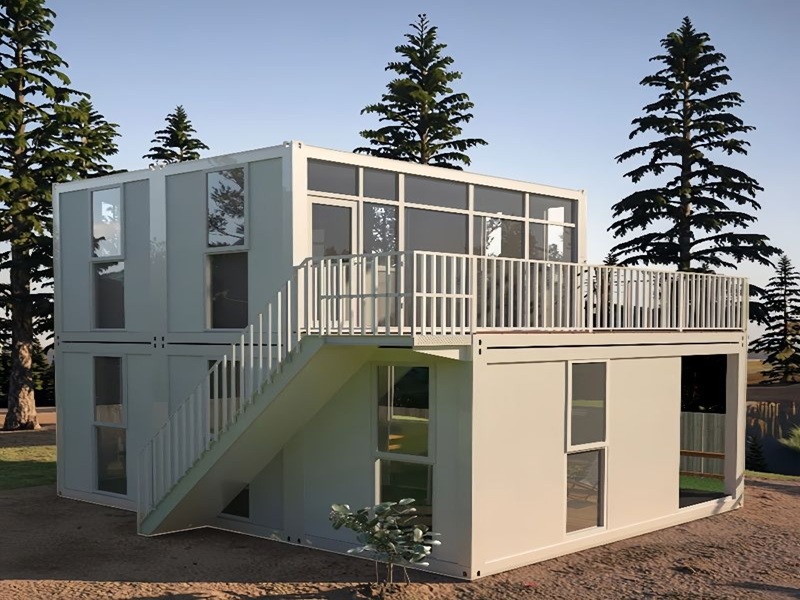
    Custom Container Offices: The Flexible, Eco-Friendly Office Solution for Modern Businesses

    For businesses seeking flexibility, cost-efficiency and sustainability, custom container offices are a superior alternative to traditional offices. Ideal for construction on-site needs, startups cutting overheads or unique pop-up workspaces, these modular solutions deliver. Here’s their key value and customization tips.
     

    Why Custom Container Offices Outshine Traditional Workspaces

    Container offices’ core advantages, enhanced by customization, outperform conventional builds:

    1. Unbeatable Speed & Cost Savings

    Traditional builds take 6–12 months; container offices deploy in 4–8 weeks. Clients save 30–50% vs. brick-and-mortar, thanks to standardized production and minimal on-site labor. 

    2. Eco-Friendly Credentials That Impress

    Sustainability is guaranteed: 90% recyclable steel frames reduce carbon emissions (286 tons less per 10,000 sq. ft.). Integrate energy-efficient windows, LEDs and solar compatibility to lower utility costs.

    3. Flexibility to Grow & Adapt

    Modular design allows adding units, relocating or reconfiguring layouts (open-plan, private offices) easily. No long-term lease locks—they grow with your business.

    4. Durability & Comfort You Can Trust

    Double-layered panels (steel exterior, insulation interior) ensure durability: 38+ dB soundproofing, A-class fire resistance and -20°C to 40°C thermal performance—perfect for harsh sites.
     

    How to Customize Your Container Office: Key Design Dimensions

    Customization tailors to your workflow and brand—key dimensions:

    1. Space & Layout Customization

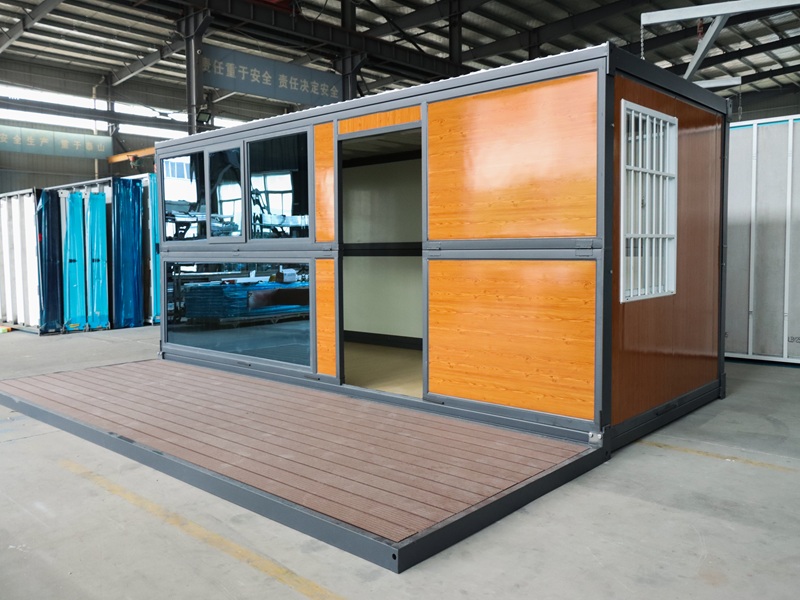
    Standard 6m×2.8m×2.8m containers combine horizontally/vertically. Popular layouts: 1–2 containers for construction on-site; 3–4 for startup hubs; insulated units for remote operations.

    2. Aesthetic & Brand Alignment

    Customize exteriors with brand colors/logos or wood cladding. Interiors offer eco-paint, hardwood floors or acoustic tiles—exposed steel beams suit industrial-chic styles.

    3. Functional Add-Ons for Productivity

    Add productivity-focused features: HVAC for climate control, built-in tech (cable management, Wi-Fi boosters), accessibility ramps, or exterior porches/planters.


    Real-World Success Stories

    Proven success across industries:
    Construction: 2-container on-site office deployed in 3 weeks, 40% cheaper than temp modular builds. • Startup: 8-container Berlin co-working space saved 35% on rent. • Mining: Australian desert unit withstood harsh conditions 3+ years.


    Key Considerations for Your Custom Container Office

    Smooth implementation requires:
    Regulations: We assist with permits (CE for EU, UL for US). • Site Prep: Level, compacted surface needed. • Long-Term: Bolt-together connections for easy relocation.


    Ready to Design Your Custom Container Office?

    Custom container offices offer flexibility, sustainability and cost savings for any business size. Start with a free consultation to define needs. Reach out for a personalized quote.
     

    Customized Container Office

    Area: China Nanjing

    Room Type: container house            

    Area: 100m²

    Scenes: Office Warehouse Time: 2025Year


  • China
    China

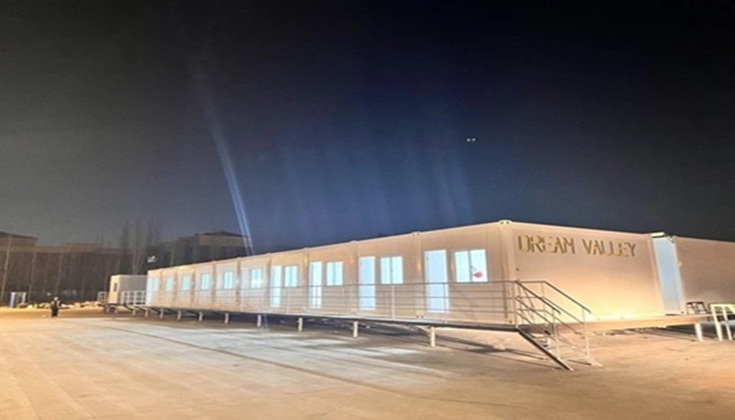
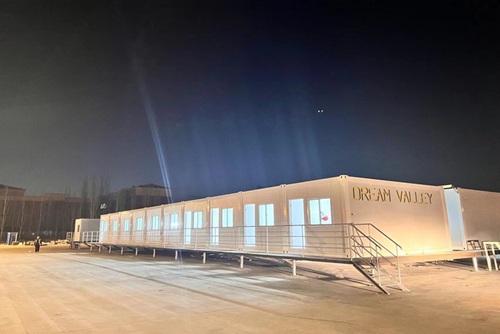
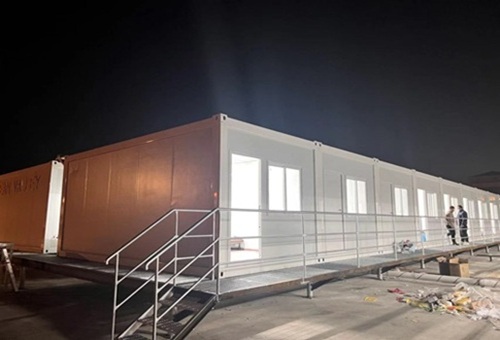
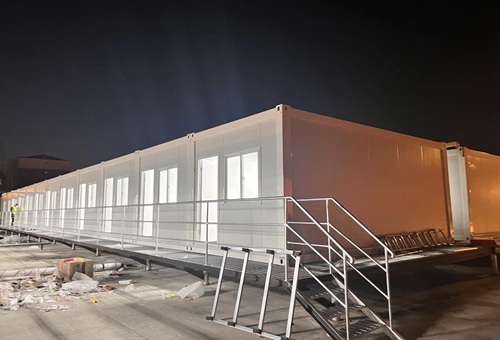
    Container modular hospital 

    Area: China Harbin

    Room Type: Prefab House、Modular House       

    Area: 5000m²or more 

    Scenes: Office Warehouse Time: 2021Year

    Mobile Medical Fortress: Container Hospitals, Making Life Protection More Timely

    When roads are blocked after an earthquake, when villagers in remote mountainous areas have to travel over mountains and hills to see a doctor, or when public health emergencies require temporary expansion of medical capacity—the limitations of traditional hospitals, which are "fixed and require a long construction period," often leave life rescue in a passive position. The emergence of container hospitals, however, with the in-depth integration of "container characteristics" and "medical functions," breaks this dilemma and becomes an "all-round helper" for emergency rescue and grassroots medical supply.

    I. Containers as the Backbone: Rapid Deployment, Move to Wherever It Is Needed

    The inherent advantages of containers endow hospitals with the core capabilities of "mobility and quick construction":
    • On-site Treatment in 48 Hours: No complex foundation is required. Standard container modules can be transported by truck, train, or even ship. After arriving at the site, they are assembled like "building blocks"—10 modules can form a basic hospital with an outpatient clinic, emergency room, observation ward, and laboratory. The fastest water and electricity connection can be completed within 24 hours, and treatment can start within 48 hours. This efficiency is more than 5 times higher than that of traditionally temporarily built hospitals, seizing the "golden rescue time" in emergency scenarios such as earthquakes, floods, and epidemics.
    • Adaptation to Extreme Environments: The container body made of thickened anti-corrosion steel can resist low temperatures of -30℃, strong winds of force 7, and heavy rain. With internal insulation layers and ventilation systems, it can maintain a stable medical environment even in plateau pastoral areas and coastal disaster areas, solving the pain points of traditional tent hospitals that are "cold in winter, hot in summer, and prone to water leakage."

    II. Medical Care as the Core: Functional Adaptation, Great Capabilities in a Small Space

    The modular design of containers is not only a "mobile carrier" but also a "functional container," which can accurately meet different medical needs:
    • Emergency Rescue Version: Focused on "Saving Lives": Equipped with emergency stretcher passages, portable ventilators, ECG monitors, and other equipment, with reserved medical pipeline interfaces between modules, it can be quickly expanded into a "trauma emergency unit" or "infectious disease isolation unit." During a flood disaster in a certain area in 2023, a container hospital was built in only 36 hours. Within 3 days, it treated more than 200 injured people, placed 48 under isolation observation, and achieved "zero cross-infection."
    • Grassroots Supply Version: Rooted in "Convenience for the People": For remote mountainous areas and villages, container hospitals can be customized with "general outpatient clinic + chronic disease management" modules, equipped with teleconsultation systems and medicine refrigerators, solving the problem of villagers having to "travel far to see a doctor and struggle to get medicine." A container hospital in a mountainous area of Yunnan has been in operation for one year, serving 3 administrative villages. The chronic disease follow-up rate has increased from 30% to 85%, allowing the elderly to measure blood pressure and pick up hypoglycemic drugs right at their doorsteps.
    • Temporary Expansion Version: Filling the "Gap": When bed supply in urban hospitals is tight, container modules can be directly connected to the existing hospital pipeline network and expanded into "day wards" or "rehabilitation observation areas." This not only does not occupy the existing space of the hospital but also alleviates bed pressure. During an epidemic in a certain city, 20 container modules were used to expand into 100 isolation beds in only one week, providing key support for the hospital to divert mild cases.

    III. Sustainable Development: Reusable, Low-Cost and More Environmentally Friendly

    Unlike traditional temporary facilities that are "dismantled after use and waste resources," container hospitals have greater long-term value:
    • Recyclable Use: After the emergency mission, the modules can be integrally disassembled and transported to the next demand point. The main structure has a service life of more than 15 years and can serve 3-5 regions cumulatively, significantly reducing repeated construction costs.
    • Green and Low-Consumption: No construction waste is generated during the construction process. The water and electricity systems adopt energy-saving designs. Solar panels can be directly installed on the top of containers to meet basic electricity needs, enabling independent operation even in remote areas without power grids, which is in line with the concept of "low-carbon medical care."
    From a "life post" for emergency rescue to a "health beacon" for grassroots medical care, container hospitals use the "flexibility of containers" to solve the problem of "uneven distribution" of medical resources and rely on the "professionalism of hospitals" to protect everyone in need. Today, it is not just a medical facility but also a practice of the concept of "making medical resources reach every corner." Whether at disaster sites or deep in the mountains, whenever there is a need, it will "arrive on time" and use its steel body to provide a protective umbrella for lives.
     
    If the area where you are located is facing an emergency medical gap or needs to supplement grassroots medical resources, container hospitals will provide you with "customized solutions," making life protection no longer limited by distance and time.

    Container modular hospital

    Area: China

    Room Type: Prefab House、Modular House        Area: 5000m²or more

    Field: Engineering Camps

    Scenes: Office Warehouse Time: 2021Year

Leave A Message
If you are interested in our products and want to know more details,please leave a message here,we will reply you as soon as we can.
Submit

Leave A Message

Leave A Message
If you are interested in our products and want to know more details,please leave a message here,we will reply you as soon as we can.
Submit

Home

Products

whatsApp

contact